concept model: SAVVI Concept Model
Version: 1.0.2 Baseline
Created: 8 June 2026
New introduction notes.
SAVVI, standing for ‘a Scalable Approach to Vulnerability via Interoperability’, is a programme hosted by Tameside Council on behalf of the local public sector, and funded by the Ministry of Housing, Communities and Local Government (MHCLG) Local Digital Fund.
SAVVI is proposing the SAVVI Playbook, to promote how data can be used to improve early identification and smarter interventions, for vulnerable people, particularly where no single organisation has access to all the data and insight that can predict who may be at risk, and where no single organisation has all the support services.
SAVVI is proposing Data Standards towards achieving the SAVVI ambition which includes
- avoid single-use databases that can only tackle one type of vulnerability in a fixed way;
- encourage technology and service suppliers to innovate with modular solutions that can be interconnected and reused;
- unlock access to data
- reuse investments in platforms, tools, processes, trust networks etc
- enable success to be repeated elsewhere without relying on the same products and partners
This Concept Model defines the key concepts that enable data to flow around the SAVVI Process
Namespace: http://def.savviuk.org/concepts#
Default Prefix: savvi
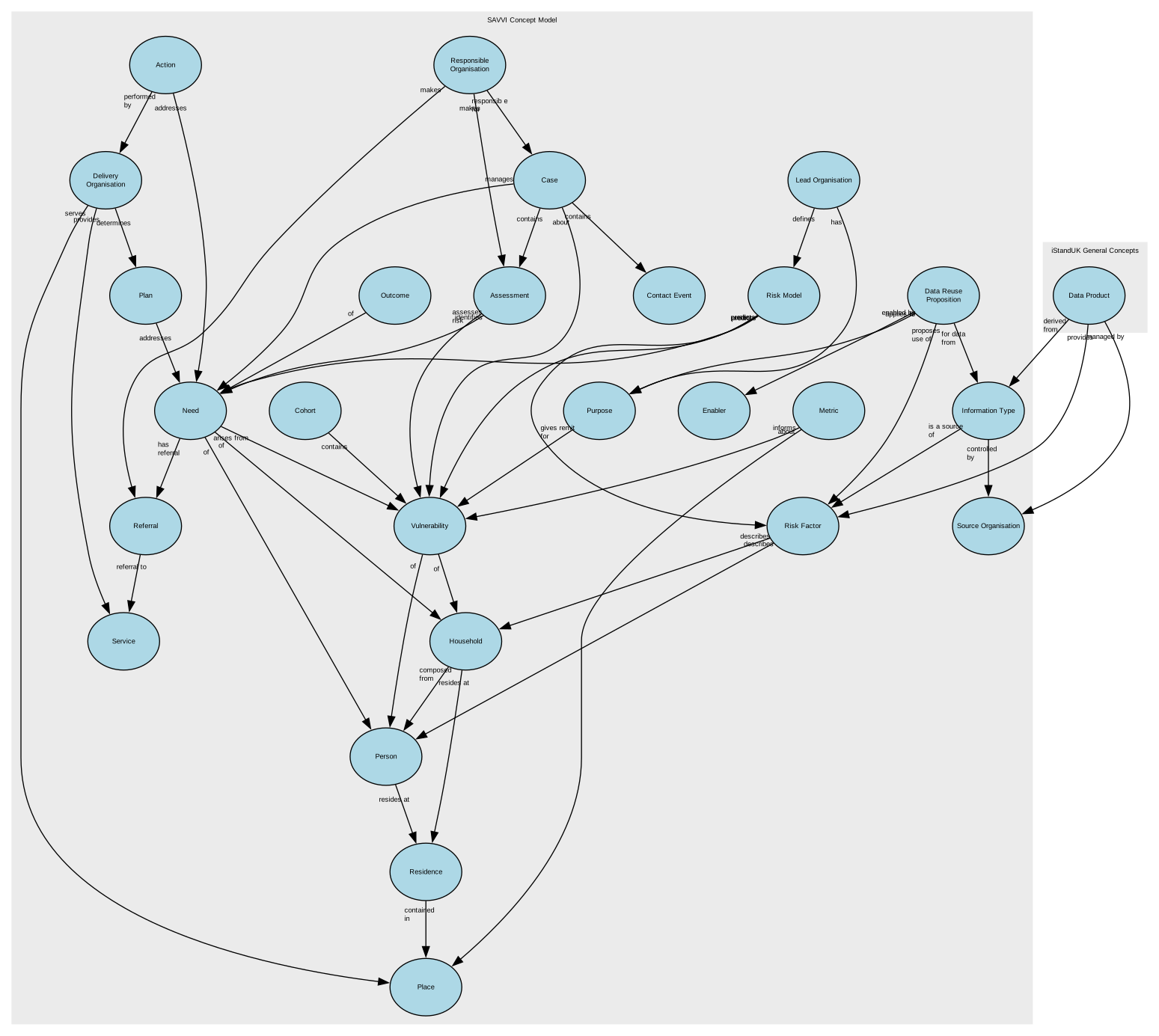
Renditions
| Format | Link |
|---|---|
| Graphviz DOT | dot.txt |
| DSD JSON | dsd.json |
| CSV | conceptmodel.csv |
| RDF Schema (Turtle) | conceptmodel.ttl |
Index
Concepts
| Concept | Description |
|---|---|
| Action | An action that has been carried out as a part of responding to a NEED. |
| Assessment | An understanding of NEEDs and circumstances. |
| Case | A container for information established to manage one or more NEEDs for a PERSON or HOUSEHOLD, through which events, evidence, activities, and decisions are recorded and tracked over time in order to achieve an intended OUTCOME. |
| Cohort | An initial prioritised list of people and households that may have a risk of a VULNERABILITY. |
| Contact Event | A record of an event in which the situation of a person or household was sought. |
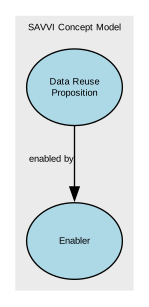
| Data Reuse Proposition | A proposition that sets out the foundation for how a group of RISK-FACTORs derived from an INFORMATION-TYPE can be reused for a specified PURPOSE, allowed by an ENABLER. |
| Delivery Organisation | A service provider who delivers actions that respond to a NEED. |
| Enabler | A source of rules that allow data to be reused for a new PURPOSE |
| Household | A collection of PERSONs who live together at the same RESIDENCE. |
| Information Type | A generic description of a dataset that one or many organisations may hold, collected for a single PURPOSE. |
| Lead Organisation | An organisation responsible for coordinating a vulnerability initiative, and with remit for the PURPOSE. |
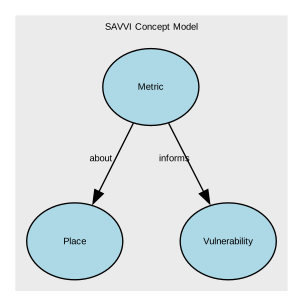
| Metric | A statistic that evidences the imperative for a VULNERABILITY to be addressed. |
| Need | An unmet requirement of a Person or Household that can be addressed. |
| Outcome | A result that has been achieved by addressing the NEEDs of a Person or Household. |
| Person | An Individual who may be vulnerable. |
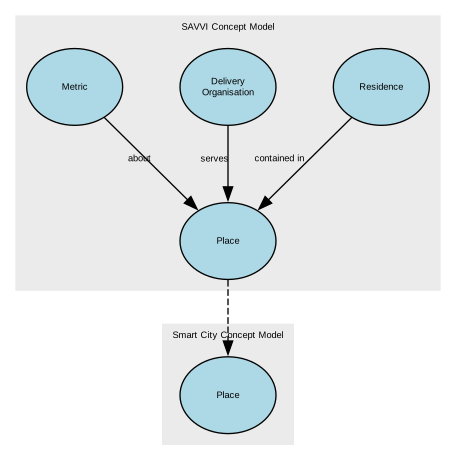
| Place | A geographic area. |
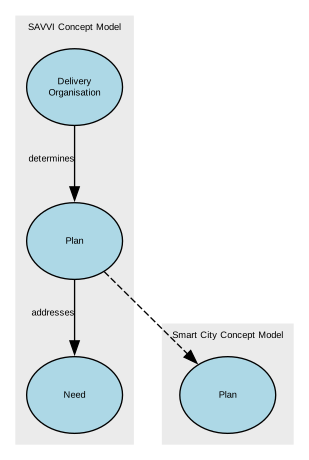
| Plan | A set of planned actions designed to respond to a NEED over a period. |
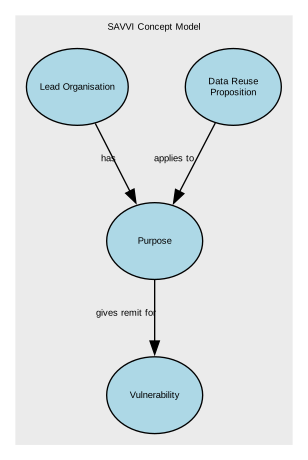
| Purpose | The remit that an Organisation has to carry out an initiative covering one or more VULNERABILITYs. |
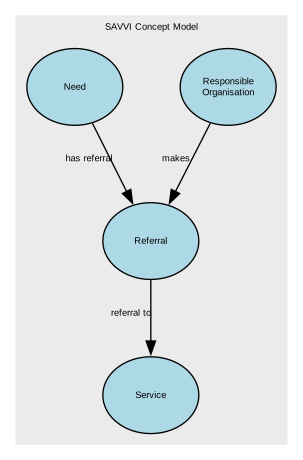
| Referral | A decision to direct a NEED to a support SERVICE. |
| Residence | A home of a PERSON |
| Responsible Organisation | An organisation who is made responsible for a CASE. |
| Risk Factor | A single fact about a Person or Household that can be combined with others to categorise the risk of a VULNERABILITY , and predict NEEDs. |
| Risk Model | The rules by which RISK FACTORs will be used to prioritise VULNERABILITY risk, and predict NEEDs. |
| Service | The ability for a Delivery Organisation to carry out one or more predetermined methods designed to deliver an OUTCOME. |
| Source Organisation | An Organisation that can provide data |
| Vulnerability | The increased risk of a poor outcome. |
Concepts from iStandUK General Concepts
| Concept | Description |
|---|---|
| Data Product | A facility that provides controlled access to one or more ATTRIBUTEs. |
| Attribute | A single fact about a Subject; preferably boolean |
Concepts from Smart City Concept Model
| Concept | Description |
|---|---|
| Event | An occurrence that has or might happen. |
| Case | A container for information recording the history of EVENTS initiated by a SERVICE Demand. |
| Organization | A group of PERSONs with a collective goal. |
| Person | An individual human being. |
| Place | A geographic or virtual part of space. |
| Plan | A list of steps with times and RESOURCEs, used to achieve an OBJECTIVE. |
| Building | A man-made structure, at a fixed or temporary PLACE, intended for sheltering PERSONs or other OBJECTs. |
Links
Concepts
Action
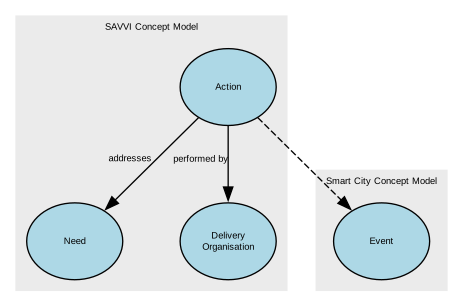
An action that has been carried out as a part of responding to a NEED.
Links:
Super Concepts:
- Event (Smart City Concept Model)
Assessment
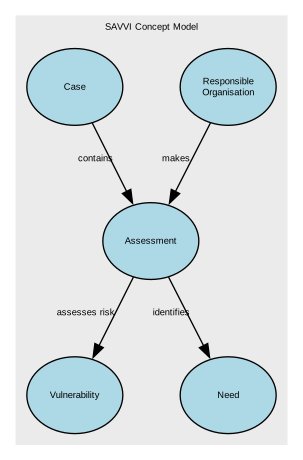
An understanding of NEEDs and circumstances.
Notes:
An ASSESSMENT is the result of capturing new information, by direct contact, and/or from information held by other organisations and professionals.
Links:
- Assessment → AssessmentAssessesRiskOfVulnerability → Vulnerability
- Assessment → AssessmentIdentifiesNeed → Need
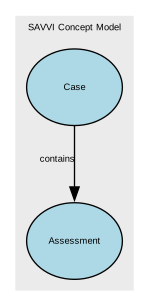
- Case → CaseContainsAssessment → Assessment
- Responsible Organisation → OrganisationMakesAssessment → Assessment
Case
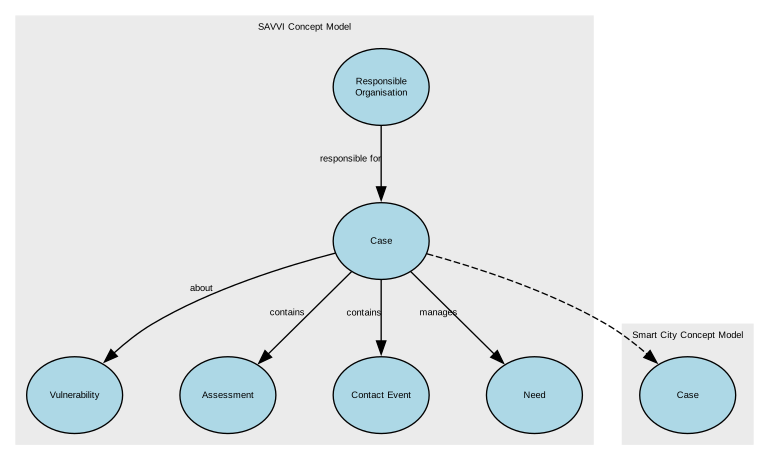
A container for information established to manage one or more NEEDs for a PERSON or HOUSEHOLD, through which events, evidence, activities, and decisions are recorded and tracked over time in order to achieve an intended OUTCOME.
Links:
- Case → CaseAboutVulnerability → Vulnerability
- Case → CaseContainsAssessment → Assessment
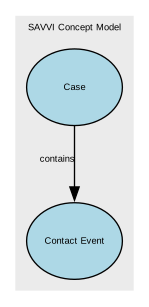
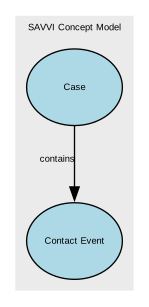
- Case → CaseContainsEvent → Contact Event
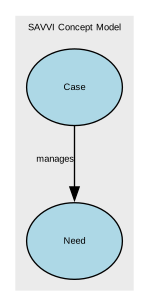
- Case → CaseManagesNeed → Need
- Responsible Organisation → OrganisationResponsibleForCase → Case
Super Concepts:
- Case (Smart City Concept Model)
Cohort
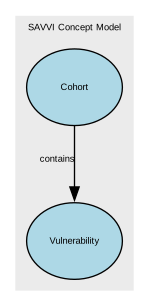
An initial prioritised list of people and households that may have a risk of a VULNERABILITY.
Notes:
This is the result of running the RISK MODEL, so that only people or households that meet a minimum risk category are listed and prioritised.
Links:
Contact Event
A record of an event in which the situation of a person or household was sought.
Links:
Data Reuse Proposition
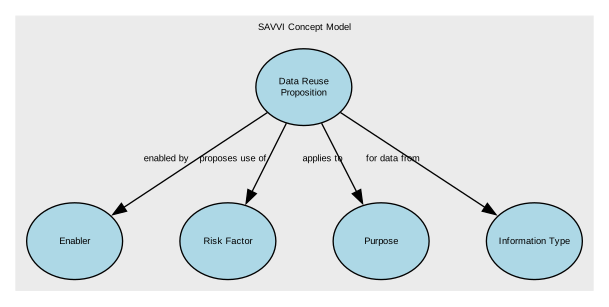
A proposition that sets out the foundation for how a group of RISK-FACTORs derived from an INFORMATION-TYPE can be reused for a specified PURPOSE, allowed by an ENABLER.
Notes:
A proposition will include
- Lawful Basis
- Legal Gateways This is not a replacement for a DPIA, or a Data Sharing Agreement between actual organisations.
Links:
- Data Reuse Proposition → EnabledBy → Enabler
- Data Reuse Proposition → ProposesUseOfRiskFactor → Risk Factor
- Data Reuse Proposition → PropositionAppliesToPurpose → Purpose
- Data Reuse Proposition → PropositionForInformationType → Information Type
Delivery Organisation
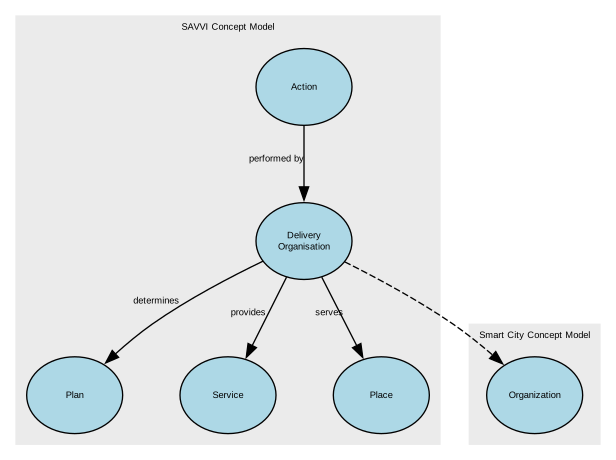
A service provider who delivers actions that respond to a NEED.
Links:
- Action → ActionPerformedByOrganisation → Delivery Organisation
- Delivery Organisation → OrganisationDeterminesPlan → Plan
- Delivery Organisation → OrganisationProvidesService → Service
- Delivery Organisation → OrganisationServesPlace → Place
Super Concepts:
- Organization (Smart City Concept Model)
Enabler
A source of rules that allow data to be reused for a new PURPOSE
Notes:
Enablers are often the source of Legal Gateways.
Links:
Household
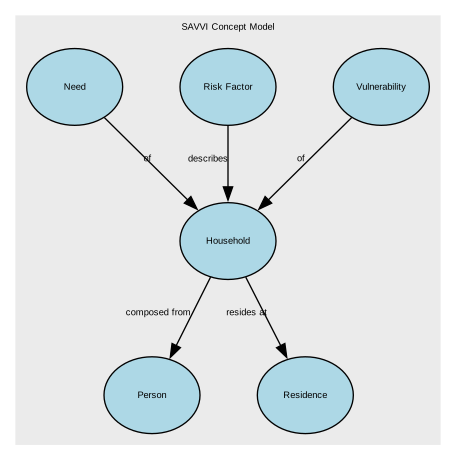
A collection of PERSONs who live together at the same RESIDENCE.
Notes:
See definition https://dictionary.cambridge.org/dictionary/english/household
Some use cases may constrain this definition further, such as …
The ONS definition
One person living alone, or a group of people (not necessarily related) living at the same address who share cooking facilities and share a living room, sitting room or dining area.
The Individualised Learner Record definition
A household is defined as a housekeeping unit or, operationally, as a social unit:
- Having common arrangements;
- Sharing household expenses or daily needs;
- In a shared common residence.
A household includes either one person living alone or a group of people, not necessarily related, living at the same address with common housekeeping, i.e. sharing at least one meal per day or sharing a living or sitting room.
Links:
- Household → HouseholdComposedFromPerson → Person
- Household → HouseholdHasResidence → Residence
- Need → NeedOfHousehold → Household
- Risk Factor → RiskFactorDescribesHousehold → Household
- Vulnerability → VulnerabilityOfHousehold → Household
Information Type
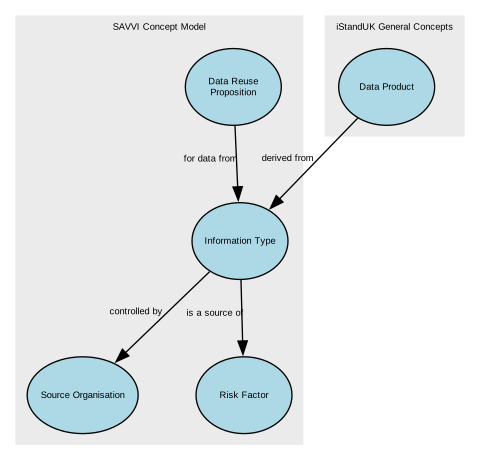
A generic description of a dataset that one or many organisations may hold, collected for a single PURPOSE.
Notes:
Examples of INFORMATION-TYPEs include
Adult Social Care
Council Tax
Universal Credit The Supporting Families programme gives examples including
A&E records
Health Visitor
Police reports
School Attendance
Links:
- Data Product → DataProductDerivedFromInformationType → Information Type
- Information Type → InformationTypeHasController → Source Organisation
- Information Type → InformationTypeIsASourceOfRiskFactor → Risk Factor
- Data Reuse Proposition → PropositionForInformationType → Information Type
Lead Organisation
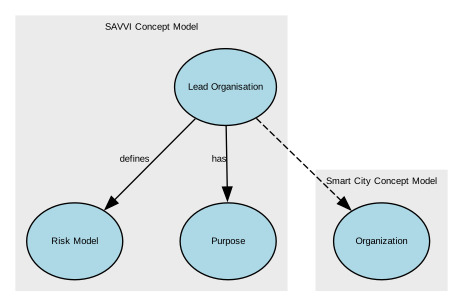
An organisation responsible for coordinating a vulnerability initiative, and with remit for the PURPOSE.
Notes:
This organisation will be responsible for the oversight of Information Governance.
Links:
- Lead Organisation → OrganisationDefinesRiskModel → Risk Model
- Lead Organisation → OrganisationHasPurpose → Purpose
Super Concepts:
- Organization (Smart City Concept Model)
Metric
A statistic that evidences the imperative for a VULNERABILITY to be addressed.
Notes:
Examples of METRICs include
- Rate of debt relief orders per 10,000 adults
- Proportion of adults in receipt of Housing Benefits METRICs can apply to a locality or a population segment, which can then be compared to illustrate outliers.
The Local Government Association (LGA) defines a set of METRICs at https://standards.esd.org.uk/?uri=list%2FmetricTypes
Links:
Need
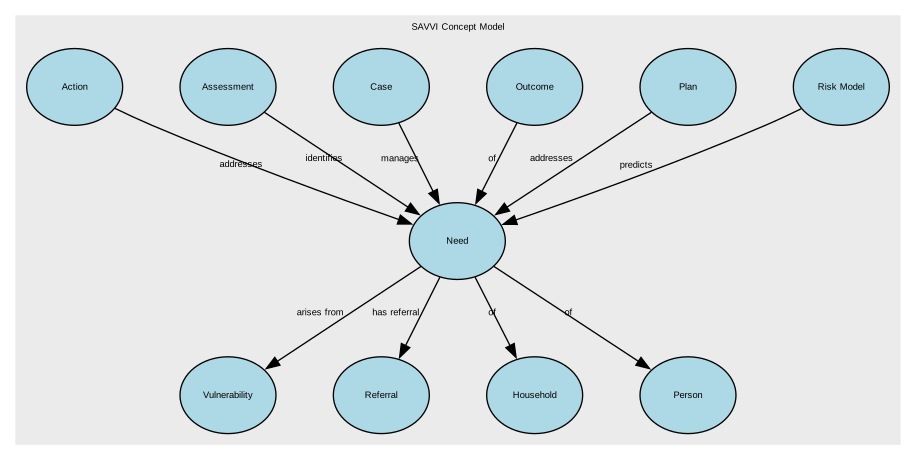
An unmet requirement of a Person or Household that can be addressed.
Notes:
Examples of NEEDs include
secure housing
managing debt
ensure take up of benefits
to be evacuated during a flood The Supporting Families programme lists 34 NEEDs including
parenting support
support with their finances
achieve at least 90% school attendance
Links:
- Action → ActionAddressesNeed → Need
- Assessment → AssessmentIdentifiesNeed → Need
- Case → CaseManagesNeed → Need
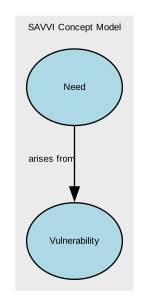
- Need → NeedArisesFromVulnerability → Vulnerability
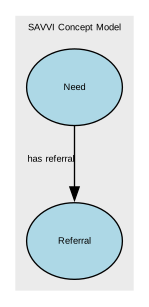
- Need → NeedHasReferral → Referral
- Need → NeedOfHousehold → Household
- Need → NeedOfPerson → Person
- Outcome → OutcomeOfNeed → Need
- Plan → PlanAddressesNeed → Need
- Risk Model → PredictsNeed → Need
Outcome
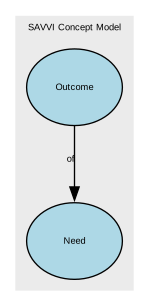
A result that has been achieved by addressing the NEEDs of a Person or Household.
Notes:
Examples of OUTCOMEs include
In secure accommodation
Good school attendance The Supporting Families programme lists 64 OUTCOMES including
Young person not involved in crime or anti-social behaviour
Domestic abuse has stopped
Adult is in work
Debt is being managed or has been resolved
Links:
- Outcome → OutcomeOfNeed → Need
Person
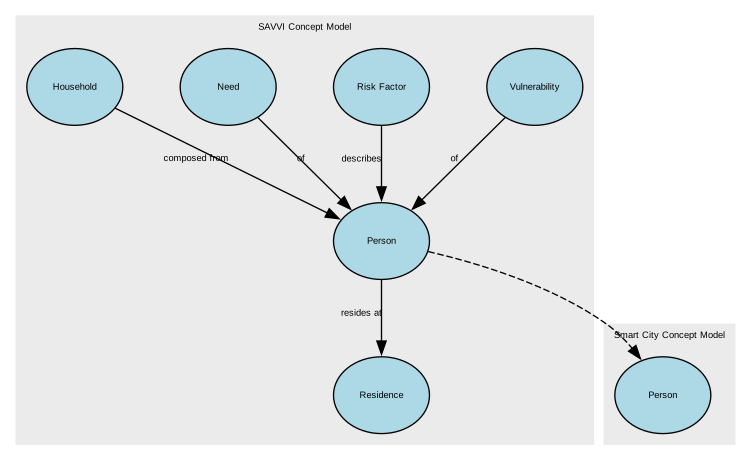
An Individual who may be vulnerable.
Links:
- Household → HouseholdComposedFromPerson → Person
- Need → NeedOfPerson → Person
- Person → PersonResidesAt → Residence
- Risk Factor → RiskFactorDescribesPerson → Person
- Vulnerability → VulnerabilityOfPerson → Person
Super Concepts:
- Person (Smart City Concept Model)
Place
A geographic area.
Notes:
This should be a recognised geospatial definition with an identifier.
Links:
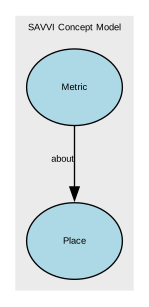
- Metric → MetricAboutSubject → Place
- Delivery Organisation → OrganisationServesPlace → Place
- Residence → ResidenceContainedInPlace → Place
Super Concepts:
- Place (Smart City Concept Model)
Plan
A set of planned actions designed to respond to a NEED over a period.
Links:
Super Concepts:
- Plan (Smart City Concept Model)
Purpose
The remit that an Organisation has to carry out an initiative covering one or more VULNERABILITYs.
Notes:
Examples of PURPOSEs may include
- Civil Contingencies
- Homeless Prevention
- Supporting Families A PURPOSE can be defined using Powers or Duties, or an established Programme
Links:
- Lead Organisation → OrganisationHasPurpose → Purpose
- Data Reuse Proposition → PropositionAppliesToPurpose → Purpose
- Purpose → PurposeFivesRemitForVulnerability → Vulnerability
Referral
A decision to direct a NEED to a support SERVICE.
Notes:
A RESPONSIBLE ORGANISATION may refer a NEED directly to a partner Support SERVICE, or make recommendations about other relevant SERVICEs.
Links:
- Need → NeedHasReferral → Referral
- Responsible Organisation → OrgamnisationMakesReferral → Referral
- Referral → ReferralToService → Service
Residence
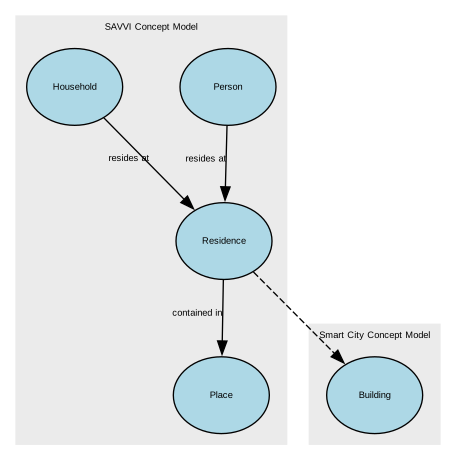
A home of a PERSON
Links:
- Household → HouseholdHasResidence → Residence
- Person → PersonResidesAt → Residence
- Residence → ResidenceContainedInPlace → Place
Super Concepts:
- Building (Smart City Concept Model)
Responsible Organisation
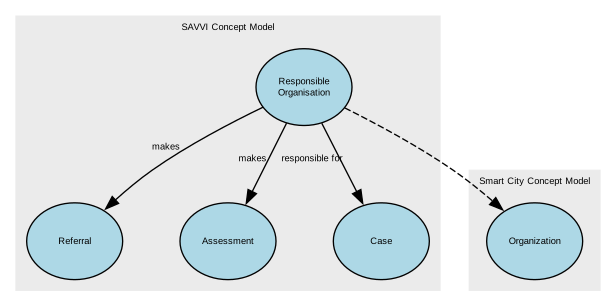
An organisation who is made responsible for a CASE.
Links:
- Responsible Organisation → OrgamnisationMakesReferral → Referral
- Responsible Organisation → OrganisationMakesAssessment → Assessment
- Responsible Organisation → OrganisationResponsibleForCase → Case
Super Concepts:
- Organization (Smart City Concept Model)
Risk Factor
A single fact about a Person or Household that can be combined with others to categorise the risk of a VULNERABILITY , and predict NEEDs.
Notes:
Examples of RISK FACTORs include
- Lives Alone
- has a Blue Badge
- has Rent Arrears
- Not Registered with a GP
- No Adult in Household in Employment RISK FACTORs can also be ‘protective’ - that is, information that demonstrates that a risk is reduced, or is already being managed.
A RISK-FACTOR is a type of ATTRIBUTE so that it can be represented as a single fact about a Person or Household; preferably boolean but could have a single value that can be acted on in a Rules Engine.
ATTRIBUTEs support data-minimisation so that only the necessary information is passed, using a precise definition.
ATTRIBUTEs are also useful for other uses such as establishing eligibility for a Service.
Links:
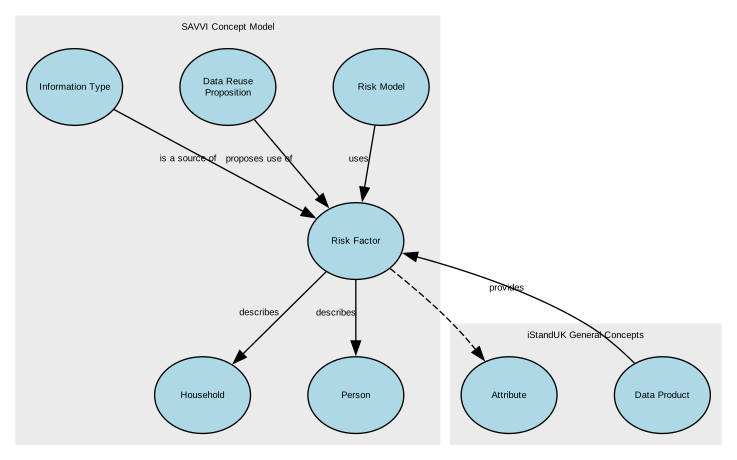
- Data Product → DataProductProvidesAccessTo → Risk Factor
- Information Type → InformationTypeIsASourceOfRiskFactor → Risk Factor
- Data Reuse Proposition → ProposesUseOfRiskFactor → Risk Factor
- Risk Factor → RiskFactorDescribesHousehold → Household
- Risk Factor → RiskFactorDescribesPerson → Person
- Risk Model → RiskModelUsesRiskFactor → Risk Factor
Super Concepts:
- Attribute (iStandUK General Concepts)
Risk Model
The rules by which RISK FACTORs will be used to prioritise VULNERABILITY risk, and predict NEEDs.
Notes:
RISK FACTORS can be combined and weighted to identify and categorise people and households who may have a VULNERABILITY, and predict NEEDs.
Risk Models should be based on evidence and studies, and will be continually improved by learning.
Links:
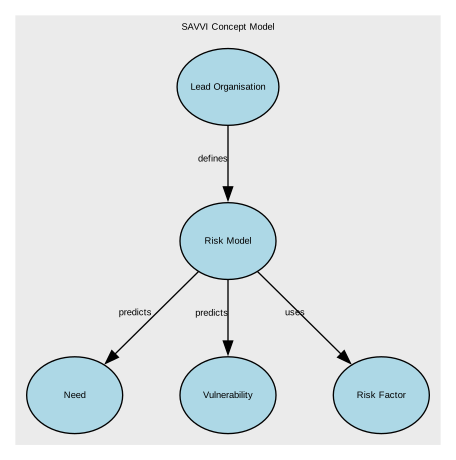
- Lead Organisation → OrganisationDefinesRiskModel → Risk Model
- Risk Model → PredictsNeed → Need
- Risk Model → PredictsVulnerabilty → Vulnerability
- Risk Model → RiskModelUsesRiskFactor → Risk Factor
Service
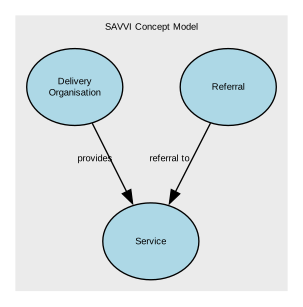
The ability for a Delivery Organisation to carry out one or more predetermined methods designed to deliver an OUTCOME.
Notes:
Examples of SERVICE include
- Benefits Review
- Counselling
Links:
- Delivery Organisation → OrganisationProvidesService → Service
- Referral → ReferralToService → Service
Source Organisation
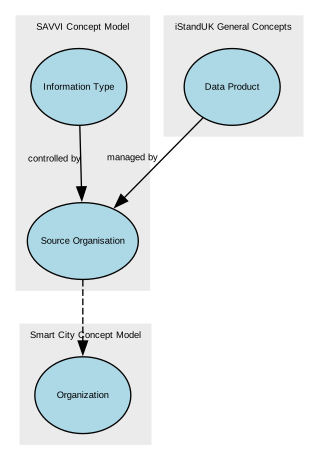
An Organisation that can provide data
Links:
- Data Product → DataProductManagedBySourceOrganisation → Source Organisation
- Information Type → InformationTypeHasController → Source Organisation
Super Concepts:
- Organization (Smart City Concept Model)
Vulnerability
The increased risk of a poor outcome.
Notes:
VULNERABILITYs might include
becoming homeless
being unsafe during adverse weather such as a flood
children disadvantaged by poverty The Supporting Families programme call these “Headline Outcomes”, with examples such as
getting a good education
children safe from abuse and exploitation
Links:
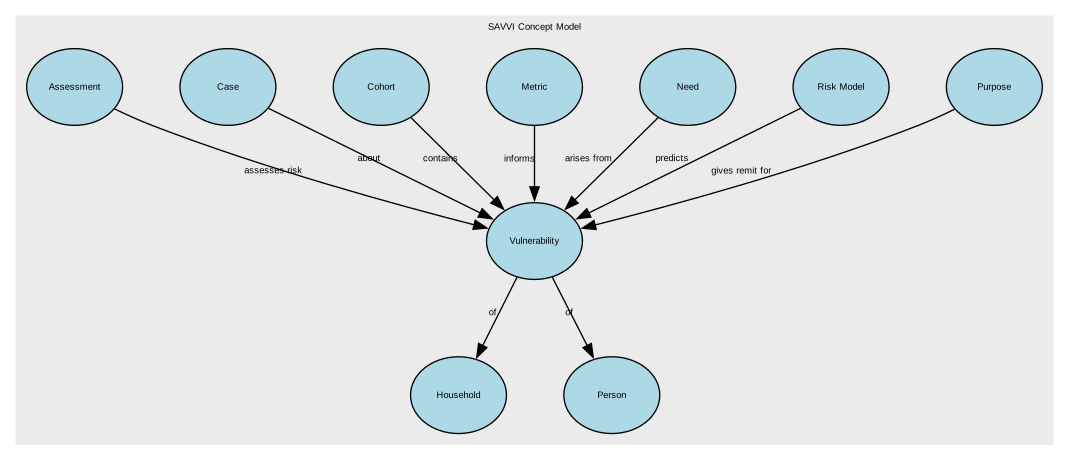
- Assessment → AssessmentAssessesRiskOfVulnerability → Vulnerability
- Case → CaseAboutVulnerability → Vulnerability
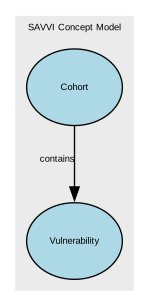
- Cohort → CohortContainsVulnerability → Vulnerability
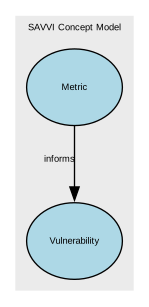
- Metric → MetricInformsVulnerability → Vulnerability
- Need → NeedArisesFromVulnerability → Vulnerability
- Risk Model → PredictsVulnerabilty → Vulnerability
- Purpose → PurposeFivesRemitForVulnerability → Vulnerability
- Vulnerability → VulnerabilityOfHousehold → Household
- Vulnerability → VulnerabilityOfPerson → Person
Links
ActionAddressesNeed
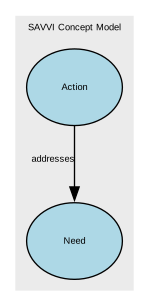
From: Action
Link: ActionAddressesNeed
To: Need
Label: addresses
Inverse Label: addressed by
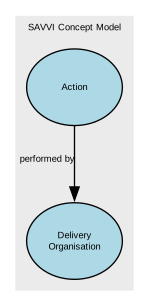
ActionPerformedByOrganisation
From: Action
Link: ActionPerformedByOrganisation
To: Delivery Organisation
Label: performed by
Inverse Label: performs
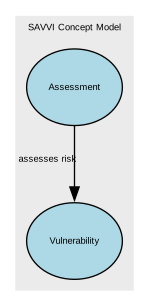
AssessmentAssessesRiskOfVulnerability
From: Assessment
Link: AssessmentAssessesRiskOfVulnerability
To: Vulnerability
Label: assesses risk
Inverse Label: assessed by
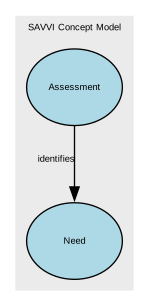
AssessmentIdentifiesNeed
From: Assessment
Link: AssessmentIdentifiesNeed
To: Need
Label: identifies
Inverse Label: identified by
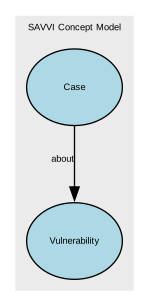
CaseAboutVulnerability
From: Case
Link: CaseAboutVulnerability
To: Vulnerability
Label: about
Inverse Label: case
CaseContainsAssessment
From: Case
Link: CaseContainsAssessment
To: Assessment
Label: contains
Inverse Label: contained in
CaseContainsEvent
From: Case
Link: CaseContainsEvent
To: Contact Event
Label: contains
Inverse Label: contained in
CaseManagesNeed
From: Case
Link: CaseManagesNeed
To: Need
Label: manages
Inverse Label: managed in
CohortContainsVulnerability
From: Cohort
Link: CohortContainsVulnerability
To: Vulnerability
Label: contains
Inverse Label: contained in
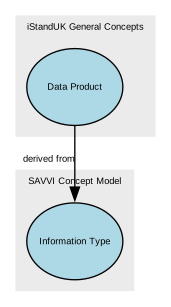
DataProductDerivedFromInformationType
From: Data Product
Link: DataProductDerivedFromInformationType
To: Information Type
Label: derived from
Inverse Label: source of
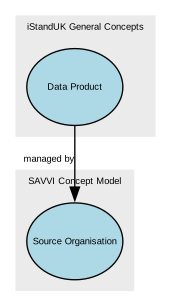
DataProductManagedBySourceOrganisation
From: Data Product
Link: DataProductManagedBySourceOrganisation
To: Source Organisation
Label: managed by
Inverse Label: manages
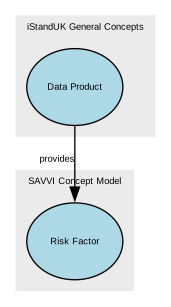
DataProductProvidesAccessTo
From: Data Product
Link: DataProductProvidesAccessTo
To: Risk Factor
Label: provides
Inverse Label: provided from
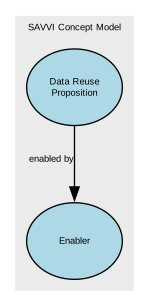
EnabledBy
From: Data Reuse Proposition
Link: EnabledBy
To: Enabler
Label: enabled by
Inverse Label: enables
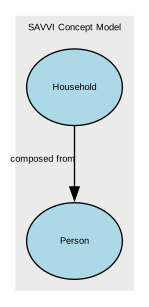
HouseholdComposedFromPerson
From: Household
Link: HouseholdComposedFromPerson
To: Person
Label: composed from
Inverse Label: part of
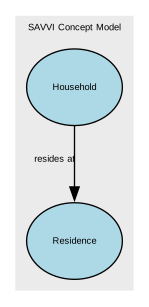
HouseholdHasResidence
From: Household
Link: HouseholdHasResidence
To: Residence
Label: resides at
Inverse Label: residence of
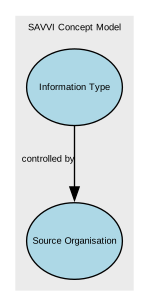
InformationTypeHasController
From: Information Type
Link: InformationTypeHasController
To: Source Organisation
Label: controlled by
Inverse Label: controller of
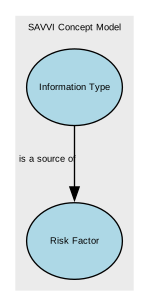
InformationTypeIsASourceOfRiskFactor
From: Information Type
Link: InformationTypeIsASourceOfRiskFactor
To: Risk Factor
Label: is a source of
Inverse Label: can be found in
MetricAboutSubject
From: Metric
Link: MetricAboutSubject
To: Place
Label: about
Inverse Label: described by
MetricInformsVulnerability
From: Metric
Link: MetricInformsVulnerability
To: Vulnerability
Label: informs
Inverse Label: informed by
NeedArisesFromVulnerability
From: Need
Link: NeedArisesFromVulnerability
To: Vulnerability
Label: arises from
Inverse Label: gives rise to
NeedHasReferral
From: Need
Link: NeedHasReferral
To: Referral
Label: has referral
Inverse Label: referral of
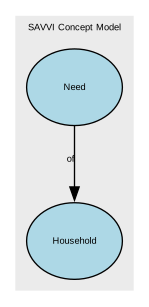
NeedOfHousehold
From: Need
Link: NeedOfHousehold
To: Household
Label: of
Inverse Label: has need
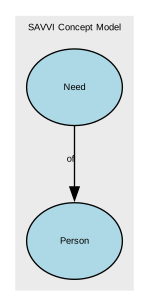
NeedOfPerson
From: Need
Link: NeedOfPerson
To: Person
Label: of
Inverse Label: has need
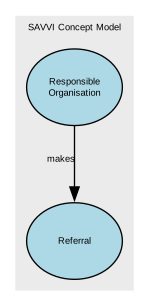
OrgamnisationMakesReferral
From: Responsible Organisation
Link: OrgamnisationMakesReferral
To: Referral
Label: makes
Inverse Label: by
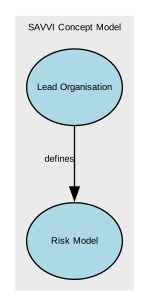
OrganisationDefinesRiskModel
From: Lead Organisation
Link: OrganisationDefinesRiskModel
To: Risk Model
Label: defines
Inverse Label: defined by
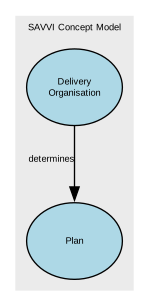
OrganisationDeterminesPlan
From: Delivery Organisation
Link: OrganisationDeterminesPlan
To: Plan
Label: determines
Inverse Label: determined by
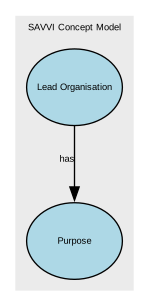
OrganisationHasPurpose
From: Lead Organisation
Link: OrganisationHasPurpose
To: Purpose
Label: has
Inverse Label: of
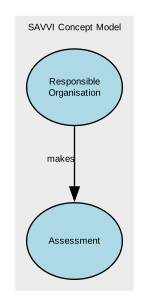
OrganisationMakesAssessment
From: Responsible Organisation
Link: OrganisationMakesAssessment
To: Assessment
Label: makes
Inverse Label: made by
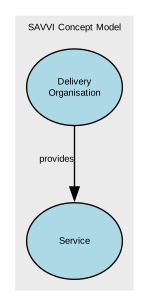
OrganisationProvidesService
From: Delivery Organisation
Link: OrganisationProvidesService
To: Service
Label: provides
Inverse Label: provided by
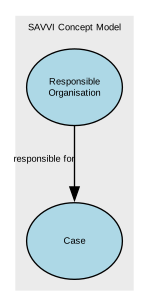
OrganisationResponsibleForCase
From: Responsible Organisation
Link: OrganisationResponsibleForCase
To: Case
Label: responsible for
Inverse Label: responsibility of
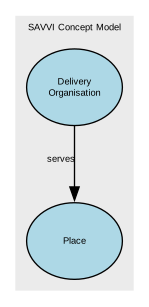
OrganisationServesPlace
From: Delivery Organisation
Link: OrganisationServesPlace
To: Place
Label: serves
Inverse Label: served by
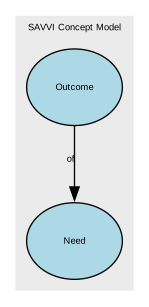
OutcomeOfNeed
From: Outcome
Link: OutcomeOfNeed
To: Need
Label: of
Inverse Label: has
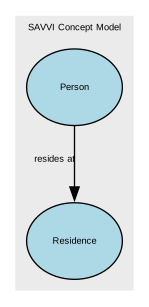
PersonResidesAt
From: Person
Link: PersonResidesAt
To: Residence
Label: resides at
Inverse Label: residence of
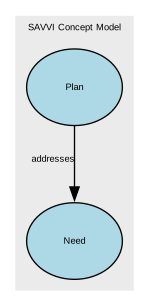
PlanAddressesNeed
From: Plan
Link: PlanAddressesNeed
To: Need
Label: addresses
Inverse Label: addressed by
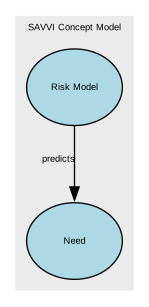
PredictsNeed
From: Risk Model
Link: PredictsNeed
To: Need
Label: predicts
Inverse Label: predicted by
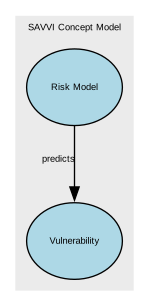
PredictsVulnerabilty
From: Risk Model
Link: PredictsVulnerabilty
To: Vulnerability
Label: predicts
Inverse Label: predicted by
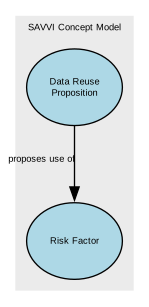
ProposesUseOfRiskFactor
From: Data Reuse Proposition
Link: ProposesUseOfRiskFactor
To: Risk Factor
Label: proposes use of
Inverse Label: reuse proposed in
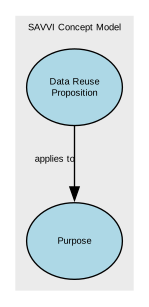
PropositionAppliesToPurpose
From: Data Reuse Proposition
Link: PropositionAppliesToPurpose
To: Purpose
Label: applies to
Inverse Label: proposed in
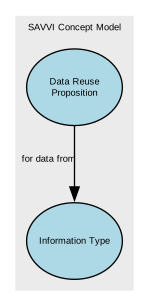
PropositionForInformationType
From: Data Reuse Proposition
Link: PropositionForInformationType
To: Information Type
Label: for data from
Inverse Label: reuse proposed by
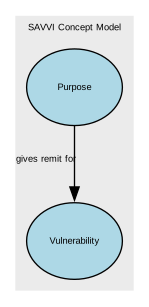
PurposeFivesRemitForVulnerability
From: Purpose
Link: PurposeFivesRemitForVulnerability
To: Vulnerability
Label: gives remit for
Inverse Label: has remit from
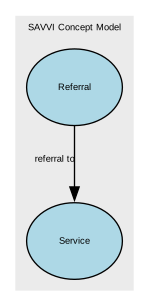
ReferralToService
From: Referral
Link: ReferralToService
To: Service
Label: referral to
Inverse Label: referral from
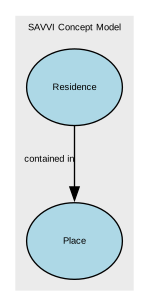
ResidenceContainedInPlace
From: Residence
Link: ResidenceContainedInPlace
To: Place
Label: contained in
Inverse Label: contains
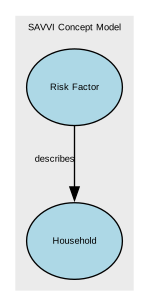
RiskFactorDescribesHousehold
From: Risk Factor
Link: RiskFactorDescribesHousehold
To: Household
Label: describes
Inverse Label: described by
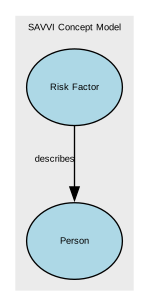
RiskFactorDescribesPerson
From: Risk Factor
Link: RiskFactorDescribesPerson
To: Person
Label: describes
Inverse Label: described by
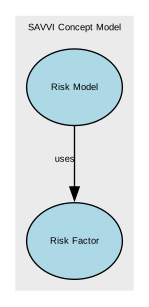
RiskModelUsesRiskFactor
From: Risk Model
Link: RiskModelUsesRiskFactor
To: Risk Factor
Label: uses
Inverse Label: used by
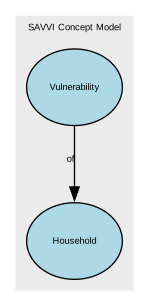
VulnerabilityOfHousehold
From: Vulnerability
Link: VulnerabilityOfHousehold
To: Household
Label: of
Inverse Label: has vulnerability
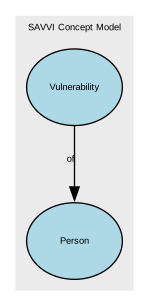
VulnerabilityOfPerson
From: Vulnerability
Link: VulnerabilityOfPerson
To: Person
Label: of
Inverse Label: has vulnerability
Concepts from iStandUK General Concepts
| Concept | Description |
|---|---|
| Data Product | A facility that provides controlled access to one or more ATTRIBUTEs. |
| Attribute | A single fact about a Subject; preferably boolean |
Data Product
Concept Model: iStandUK General Concepts
A facility that provides controlled access to one or more ATTRIBUTEs.
Notes:
A DATA-PRODUCT will be designed to meet the requirements of a data consumer, and therefore will likely be a transformation from an operational data set, into a smaller set of ATTRIBUTES.
A Data Product may be a traditional database or spreadsheet that is updated periodically; however, a better solution is to provide an API or Data Stream that can be pulled and queried, against a pre-agreed PURPOSE and Terms.
Some partnerships are setting up a ‘Data Mesh’ in which Data Products are ‘nodes’ that are designed for consumers.
A consumer may ‘pull’ from many DATA-PRODUCTs across many Source Organisations. Conversely, a Source Organisation may find that a single DATA-PRODUCT can be re-used to satisfy the requirements of many consumers.
Attribute
Concept Model: iStandUK General Concepts
A single fact about a Subject; preferably boolean
Notes:
Preferably boolean, but can have a single value.
Examples of ATTRIBUTEs include
- aged over 70
- eligible for a Blue Badge
Concepts from Smart City Concept Model
| Concept | Description |
|---|---|
| Event | An occurrence that has or might happen. |
| Case | A container for information recording the history of EVENTS initiated by a SERVICE Demand. |
| Organization | A group of PERSONs with a collective goal. |
| Person | An individual human being. |
| Place | A geographic or virtual part of space. |
| Plan | A list of steps with times and RESOURCEs, used to achieve an OBJECTIVE. |
| Building | A man-made structure, at a fixed or temporary PLACE, intended for sheltering PERSONs or other OBJECTs. |
Event
Concept Model: Smart City Concept Model
An occurrence that has or might happen.
Case
Concept Model: Smart City Concept Model
A container for information recording the history of EVENTS initiated by a SERVICE Demand.
Organization
Concept Model: Smart City Concept Model
A group of PERSONs with a collective goal.
Person
Concept Model: Smart City Concept Model
An individual human being.
Place
Concept Model: Smart City Concept Model
A geographic or virtual part of space.
Plan
Concept Model: Smart City Concept Model
A list of steps with times and RESOURCEs, used to achieve an OBJECTIVE.
Building
Concept Model: Smart City Concept Model
A man-made structure, at a fixed or temporary PLACE, intended for sheltering PERSONs or other OBJECTs.