narrative: Terminologies and Masterdata
Version: Version 2
Created: 1 June 2026
Renamed title.
Concepts which need common terminology or master data
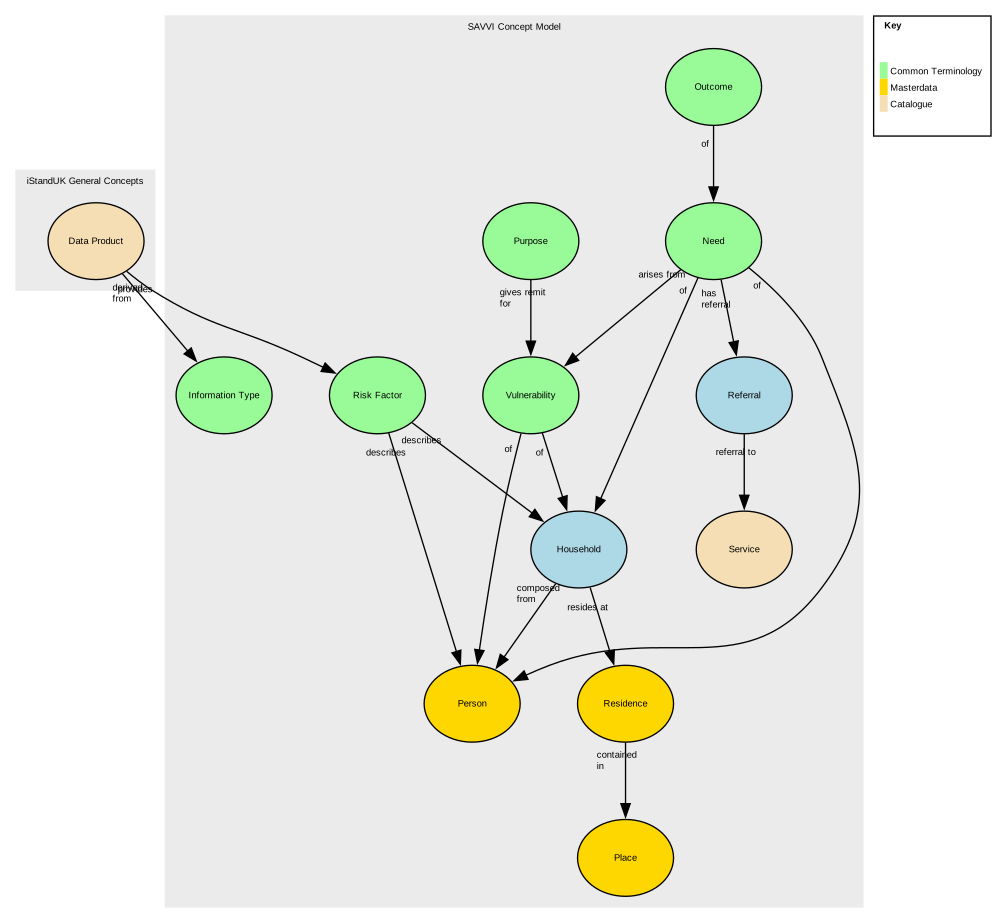
Renditions
| Format | Link |
|---|---|
| Graphviz DOT | dot.txt |
| DSD JSON | dsd.json |
Index
Concepts from iStandUK General Concepts
| Concept | Description |
|---|---|
| Data Product | A facility that provides controlled access to one or more ATTRIBUTEs. |
Concepts from SAVVI Concept Model
| Concept | Description |
|---|---|
| Household | A collection of PERSONs who live together at the same RESIDENCE. |
| Information Type | A generic description of a dataset that one or many organisations may hold, collected for a single PURPOSE. |
| Need | An unmet requirement of a Person or Household that can be addressed. |
| Outcome | A result that has been achieved by addressing the NEEDs of a Person or Household. |
| Person | An Individual who may be vulnerable. |
| Place | A geographic area. |
| Purpose | The remit that an Organisation has to carry out an initiative covering one or more VULNERABILITYs. |
| Referral | A decision to direct a NEED to a support SERVICE. |
| Residence | A home of a PERSON |
| Risk Factor | A single fact about a Person or Household that can be combined with others to categorise the risk of a VULNERABILITY , and predict NEEDs. |
| Service | The ability for a Delivery Organisation to carry out one or more predetermined methods designed to deliver an OUTCOME. |
| Vulnerability | The increased risk of a poor outcome. |
Links from SAVVI Concept Model
Concepts
Data Product
Concept Model: iStandUK General Concepts
A facility that provides controlled access to one or more ATTRIBUTEs.
Notes:
A DATA-PRODUCT will be designed to meet the requirements of a data consumer, and therefore will likely be a transformation from an operational data set, into a smaller set of ATTRIBUTES.
A Data Product may be a traditional database or spreadsheet that is updated periodically; however, a better solution is to provide an API or Data Stream that can be pulled and queried, against a pre-agreed PURPOSE and Terms.
Some partnerships are setting up a ‘Data Mesh’ in which Data Products are ‘nodes’ that are designed for consumers.
A consumer may ‘pull’ from many DATA-PRODUCTs across many Source Organisations. Conversely, a Source Organisation may find that a single DATA-PRODUCT can be re-used to satisfy the requirements of many consumers.
Links:
- Data Product → DataProductDerivedFromInformationType → Information Type
- Data Product → DataProductProvidesAccessTo → Risk Factor
Household
Concept Model: SAVVI Concept Model
A collection of PERSONs who live together at the same RESIDENCE.
Notes:
See definition https://dictionary.cambridge.org/dictionary/english/household
Some use cases may constrain this definition further, such as …
The ONS definition
One person living alone, or a group of people (not necessarily related) living at the same address who share cooking facilities and share a living room, sitting room or dining area.
The Individualised Learner Record definition
A household is defined as a housekeeping unit or, operationally, as a social unit:
- Having common arrangements;
- Sharing household expenses or daily needs;
- In a shared common residence.
A household includes either one person living alone or a group of people, not necessarily related, living at the same address with common housekeeping, i.e. sharing at least one meal per day or sharing a living or sitting room.
Links:
- Household → HouseholdComposedFromPerson → Person
- Household → HouseholdHasResidence → Residence
- Need → NeedOfHousehold → Household
- Risk Factor → RiskFactorDescribesHousehold → Household
- Vulnerability → VulnerabilityOfHousehold → Household
Information Type
Concept Model: SAVVI Concept Model
A generic description of a dataset that one or many organisations may hold, collected for a single PURPOSE.
Notes:
Examples of INFORMATION-TYPEs include
Adult Social Care
Council Tax
Universal Credit The Supporting Families programme gives examples including
A&E records
Health Visitor
Police reports
School Attendance
Links:
Need
Concept Model: SAVVI Concept Model
An unmet requirement of a Person or Household that can be addressed.
Notes:
Examples of NEEDs include
secure housing
managing debt
ensure take up of benefits
to be evacuated during a flood The Supporting Families programme lists 34 NEEDs including
parenting support
support with their finances
achieve at least 90% school attendance
Links:
- Need → NeedArisesFromVulnerability → Vulnerability
- Need → NeedHasReferral → Referral
- Need → NeedOfHousehold → Household
- Need → NeedOfPerson → Person
- Outcome → OutcomeOfNeed → Need
Outcome
Concept Model: SAVVI Concept Model
A result that has been achieved by addressing the NEEDs of a Person or Household.
Notes:
Examples of OUTCOMEs include
In secure accommodation
Good school attendance The Supporting Families programme lists 64 OUTCOMES including
Young person not involved in crime or anti-social behaviour
Domestic abuse has stopped
Adult is in work
Debt is being managed or has been resolved
Links:
- Outcome → OutcomeOfNeed → Need
Person
Concept Model: SAVVI Concept Model
An Individual who may be vulnerable.
Links:
- Household → HouseholdComposedFromPerson → Person
- Need → NeedOfPerson → Person
- Risk Factor → RiskFactorDescribesPerson → Person
- Vulnerability → VulnerabilityOfPerson → Person
Place
Concept Model: SAVVI Concept Model
A geographic area.
Notes:
This should be a recognised geospatial definition with an identifier.
Links:
Purpose
Concept Model: SAVVI Concept Model
The remit that an Organisation has to carry out an initiative covering one or more VULNERABILITYs.
Notes:
Examples of PURPOSEs may include
- Civil Contingencies
- Homeless Prevention
- Supporting Families A PURPOSE can be defined using Powers or Duties, or an established Programme
Links:
Referral
Concept Model: SAVVI Concept Model
A decision to direct a NEED to a support SERVICE.
Notes:
A RESPONSIBLE ORGANISATION may refer a NEED directly to a partner Support SERVICE, or make recommendations about other relevant SERVICEs.
Links:
Residence
Concept Model: SAVVI Concept Model
A home of a PERSON
Links:
Risk Factor
Concept Model: SAVVI Concept Model
A single fact about a Person or Household that can be combined with others to categorise the risk of a VULNERABILITY , and predict NEEDs.
Notes:
Examples of RISK FACTORs include
- Lives Alone
- has a Blue Badge
- has Rent Arrears
- Not Registered with a GP
- No Adult in Household in Employment RISK FACTORs can also be ‘protective’ - that is, information that demonstrates that a risk is reduced, or is already being managed.
A RISK-FACTOR is a type of ATTRIBUTE so that it can be represented as a single fact about a Person or Household; preferably boolean but could have a single value that can be acted on in a Rules Engine.
ATTRIBUTEs support data-minimisation so that only the necessary information is passed, using a precise definition.
ATTRIBUTEs are also useful for other uses such as establishing eligibility for a Service.
Links:
- Data Product → DataProductProvidesAccessTo → Risk Factor
- Risk Factor → RiskFactorDescribesHousehold → Household
- Risk Factor → RiskFactorDescribesPerson → Person
Service
Concept Model: SAVVI Concept Model
The ability for a Delivery Organisation to carry out one or more predetermined methods designed to deliver an OUTCOME.
Notes:
Examples of SERVICE include
- Benefits Review
- Counselling
Links:
Vulnerability
Concept Model: SAVVI Concept Model
The increased risk of a poor outcome.
Notes:
VULNERABILITYs might include
becoming homeless
being unsafe during adverse weather such as a flood
children disadvantaged by poverty The Supporting Families programme call these “Headline Outcomes”, with examples such as
getting a good education
children safe from abuse and exploitation
Links:
- Need → NeedArisesFromVulnerability → Vulnerability
- Purpose → PurposeFivesRemitForVulnerability → Vulnerability
- Vulnerability → VulnerabilityOfHousehold → Household
- Vulnerability → VulnerabilityOfPerson → Person
Links
DataProductDerivedFromInformationType
From: Data Product
Label: derived from
To: Information Type
Concept Model: SAVVI Concept Model
DataProductProvidesAccessTo
From: Data Product
Label: provides
To: Risk Factor
Concept Model: SAVVI Concept Model
HouseholdComposedFromPerson
From: Household
Label: composed from
To: Person
Concept Model: SAVVI Concept Model
HouseholdHasResidence
From: Household
Label: resides at
To: Residence
Concept Model: SAVVI Concept Model
NeedArisesFromVulnerability
From: Need
Label: arises from
To: Vulnerability
Concept Model: SAVVI Concept Model
NeedHasReferral
From: Need
Label: has referral
To: Referral
Concept Model: SAVVI Concept Model
NeedOfHousehold
From: Need
Label: of
To: Household
Concept Model: SAVVI Concept Model
NeedOfPerson
From: Need
Label: of
To: Person
Concept Model: SAVVI Concept Model
OutcomeOfNeed
From: Outcome
Label: of
To: Need
Concept Model: SAVVI Concept Model
PurposeFivesRemitForVulnerability
From: Purpose
Label: gives remit for
To: Vulnerability
Concept Model: SAVVI Concept Model
ReferralToService
From: Referral
Label: referral to
To: Service
Concept Model: SAVVI Concept Model
ResidenceContainedInPlace
From: Residence
Label: contained in
To: Place
Concept Model: SAVVI Concept Model
RiskFactorDescribesHousehold
From: Risk Factor
Label: describes
To: Household
Concept Model: SAVVI Concept Model
RiskFactorDescribesPerson
From: Risk Factor
Label: describes
To: Person
Concept Model: SAVVI Concept Model
VulnerabilityOfHousehold
From: Vulnerability
Label: of
To: Household
Concept Model: SAVVI Concept Model
VulnerabilityOfPerson
From: Vulnerability
Label: of
To: Person
Concept Model: SAVVI Concept Model